
The Early Start Denver Model
-
The Early Start Denver Model is one of the most trusted and research supported approaches for helping very young children with autism build strong foundations in communication, social interaction, and learning. At Play Based Wellness, we choose ESDM because it reflects what science tells us about how infants and toddlers grow, how relationships shape early development, and how natural interactions support meaningful progress.
-
ESDM is a naturalistic, relationship centered intervention created specifically for children between 12 and 48 months. Instead of relying on rote drills or isolated teaching, ESDM blends developmental science with applied behavior analysis in a way that feels familiar to young children. Learning happens inside playful exchanges, shared attention, and everyday routines where children naturally communicate and explore.
The approach is grounded in decades of research on infant toddler development and the early signs of autism. This scientific base allows clinicians to target the exact areas where autism creates barriers to learning, such as social engagement, joint attention, language development, and flexible play.
-
Intervention follows a carefully developed curriculum that outlines developmental steps across communication, cognition, imitation, social engagement, play, and adaptive behavior. Children are taught within warm, responsive interactions so they stay regulated and motivated. The therapist follows the child’s lead, builds connection first, and creates meaningful opportunities to practice new skills.
ESDM can be used across settings. Sessions may occur in a clinic, at home, in childcare, or within community environments. Parents and caregivers are supported in using ESDM strategies throughout daily routines so learning continues beyond session time.
-
Research on ESDM has consistently shown improvements in language, cognitive development, adaptive behavior, social communication, and overall developmental growth. Many studies have also demonstrated gains in IQ, increased engagement with caregivers, and stronger generalization of skills to natural environments.
Because ESDM mirrors the way young children learn from relationships, it often produces progress that is both measurable and meaningful. Families also benefit through parent coaching that strengthens connection, confidence, and understanding of how to support development at home.
-
Although ESDM spans all developmental domains, it places special emphasis on the areas most affected by autism in early childhood. These include:
• Social emotional development
• Language and communication
• Cognitive flexibility and problem solving
• Early play and imitation
• Adaptive skills that support independenceStrategies are rooted in the developmental literature and in applied behavior analysis. Each child’s program is individualized, monitored through ongoing data, and adjusted based on the child’s unique learning patterns.
-
Parents who want to learn more about ESDM often begin with the book An Early Start for Your Child with Autism, a practical guide written for families. ESDM is also described in detail in several professional texts, including resources on assessment, curriculum, and parent coaching.
-
• Rogers and Dawson, 2010. The Early Start Denver Model for Young Children with Autism.
• Rogers, Dawson, and Vismara, 2012. An Early Start for Your Child with Autism.
• Rogers, Vismara, and Dawson, 2021. Coaching Parents of Young Children with Autism.
How We Use ABA at Play-Based Wellness
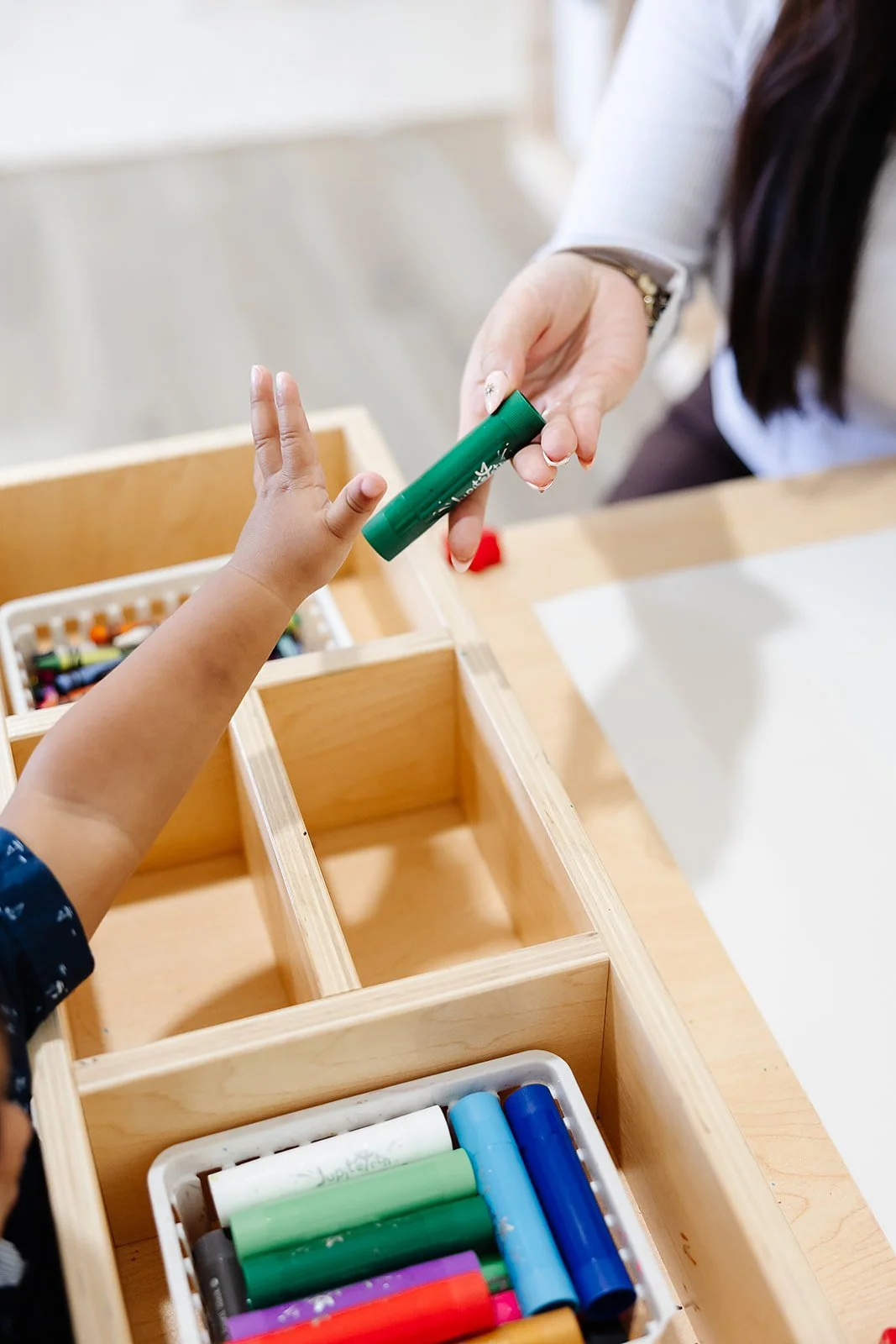
At Play-Based Wellness, we use Applied Behavior Analysis (ABA) as a framework for understanding how children learn. We do not use ABA as a system for forcing compliance or changing who a child is.
We want to be very clear. We do not use physical prompting such as hand over hand guidance. We do not use compliance based teaching. We do not aim to make children look neurotypical. We do not extinguish safe stimming. We do not ignore distress.
Instead, we use ABA principles in a way that is ethical, relationship based, and neurodiversity affirming.
What ABA Means to Us
ABA, at its core, is the science of learning. It helps us answer questions like why a behavior is happening, what skill might be missing, what the child is communicating, and what sensory or environmental factors may be contributing.
We use data and observation to understand behavior, but we always interpret behavior through a compassionate lens. Behavior is communication. If a child is dysregulated, avoidant, or engaging in challenging behavior, we first ask whether this is sensory overwhelm, whether the task is too hard, whether the task is not meaningful, whether the child has the communication tools they need, and whether the environment is supportive.
We do not view children as noncompliant. We view them as communicating a need.
Sensory Informed Care
Many autistic children experience the world through unique sensory processing. That means behavior often reflects overstimulation, understimulation, fatigue, anxiety, motor planning difficulty, or a communication breakdown.
We build treatment plans that account for sensory regulation first. If a child is not regulated, learning cannot happen safely or effectively.
We incorporate movement breaks, flexible seating, sensory supports, environmental adjustments such as lighting and noise, child led play, and regulation strategies before increasing demands.
We collaborate with our in-house Occupational Therapist to ensure care is sensory-informed, developmentally appropriate, and supportive of each child’s regulation needs.
We never attempt to train out safe stimming behaviors that help a child regulate. Regulation is foundational.
We Teach Skills, Not Compliance
Our goal is not obedience. Our goal is independence, safety, communication, and quality of life.
We write individualized plans to help children learn functional communication, emotional regulation, play skills, social connection, daily living skills, problem solving, tolerance for non preferred activities so that they can attend school, flexibility, and safety skills.
If a child cannot complete a task, we do not force it. We break the skill down. We scaffold. We model. We modify the environment. We build prerequisite skills.
If a child pulls their hand away, that boundary is respected. We believe bodily autonomy matters.
No Hand Over Hand Prompting
We do not use hand over hand physical prompting.
If physical support is ever needed for safety or skill building, we prioritize modeling, visual supports, environmental setup, and child led engagement first. We fade support as quickly as possible and prioritize independence and consent.
Children should never learn that adults can control their bodies in order to earn reinforcement.
Reinforcement Done Ethically
Reinforcement is part of how all humans learn. At Play Based Wellness, reinforcement is natural, meaningful to the child, and never used in a punitive way.
We do not use reinforcement to force eye contact, suppress safe stimming, or shape children into something they are not.
We use reinforcement to build communication, safety, and life skills that increase autonomy and reduce frustration.
Trauma Informed and Neurodiversity Affirming
We actively listen to autistic voices. We understand that some individuals have experienced harm in therapy settings, particularly in highly compliance driven models.
That is not the model we use.
Our approach is play based, relationship centered, strength based, regulation first, collaborative with families, individualized, and data informed while staying child led.
We believe autistic children do not need to be fixed. They need support, understanding, and the right tools to thrive.
What Makes Us Different
At Play Based Wellness, ABA is not about compliance. It is about understanding learning. It is about building skills safely. It is about empowering children. It is about honoring neurodiversity while supporting medically necessary skill development.
We are committed to ethical practice, continuous learning, and providing care that families can trust.
If you ever have concerns, questions, or fears about therapy, we want to hear them. Open conversations are welcome here.
Play-Based ABA
Done the Evidence-Based Way
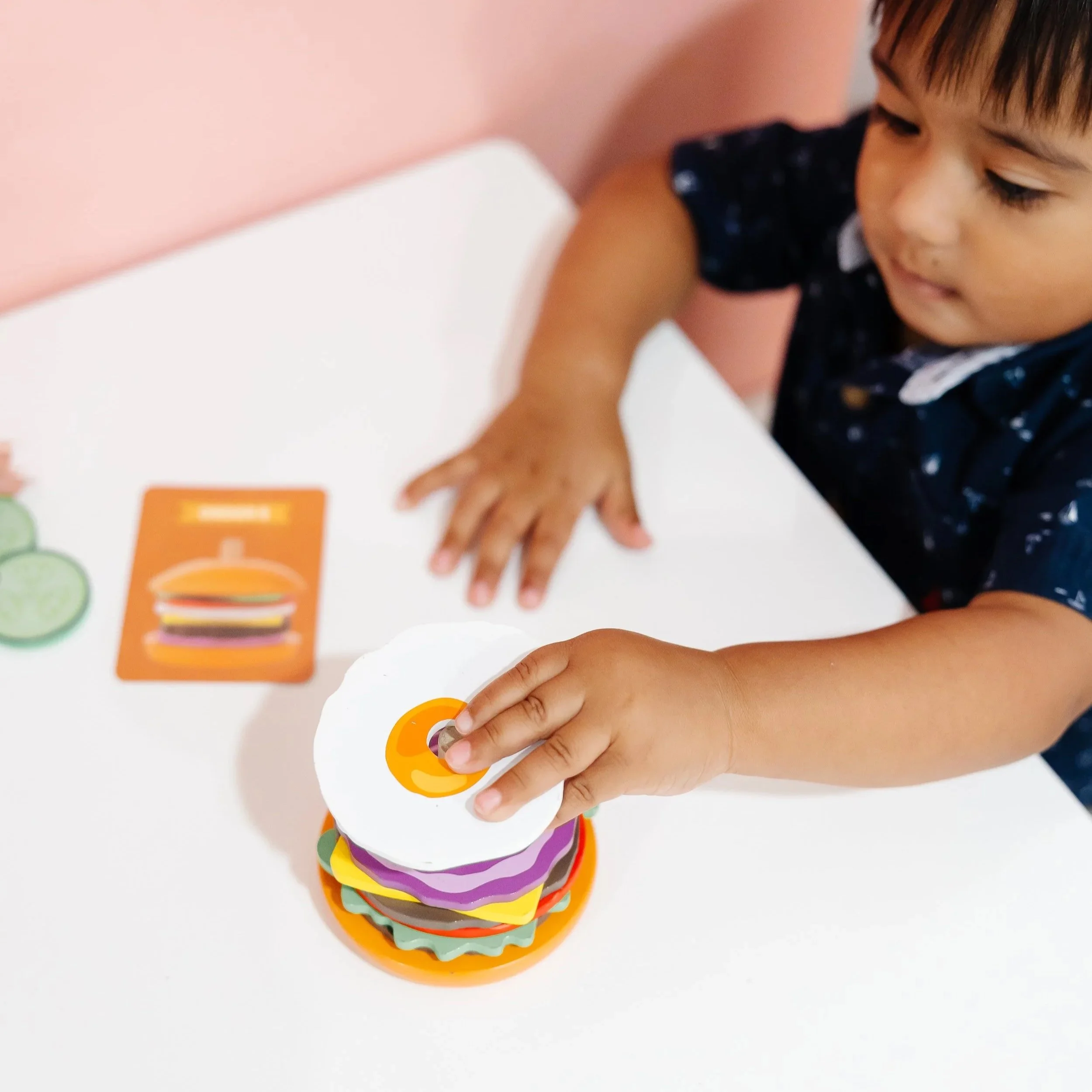
It all begins with understanding how young children actually learn. True play-based therapy is not simply playing during sessions. It is guided by naturalistic developmental behavioral interventions, also known as NDBIs. These are research-validated models that combine developmental science with applied behavior analysis in a way that feels natural, joyful, and meaningful for early learners.
At PBW, every child’s program is shaped by gold standard NDBI tools. We use assessments and teaching methods aligned with the NDBI models. These are the most widely researched and effective intervention models for young children. These assessments help us understand each child’s communication, social engagement, play skills, and learning style, so every goal is rooted in real developmental needs.
This approach matters. Many clinics advertise that they are play-based, but do not use evidence-based developmental assessments to guide treatment. Our work is different. We use validated protocols to turn play into purposeful learning, helping children build language, social understanding, problem-solving, and independence in ways that match their natural development.
Be clear, confident, and informed when choosing a provider. Your child deserves therapy that is grounded in science, driven by developmental understanding, and delivered in a way that feels warm, connected, and joyful. At PBW, we are committed to an approach that grows with your child and honors how children learn best.